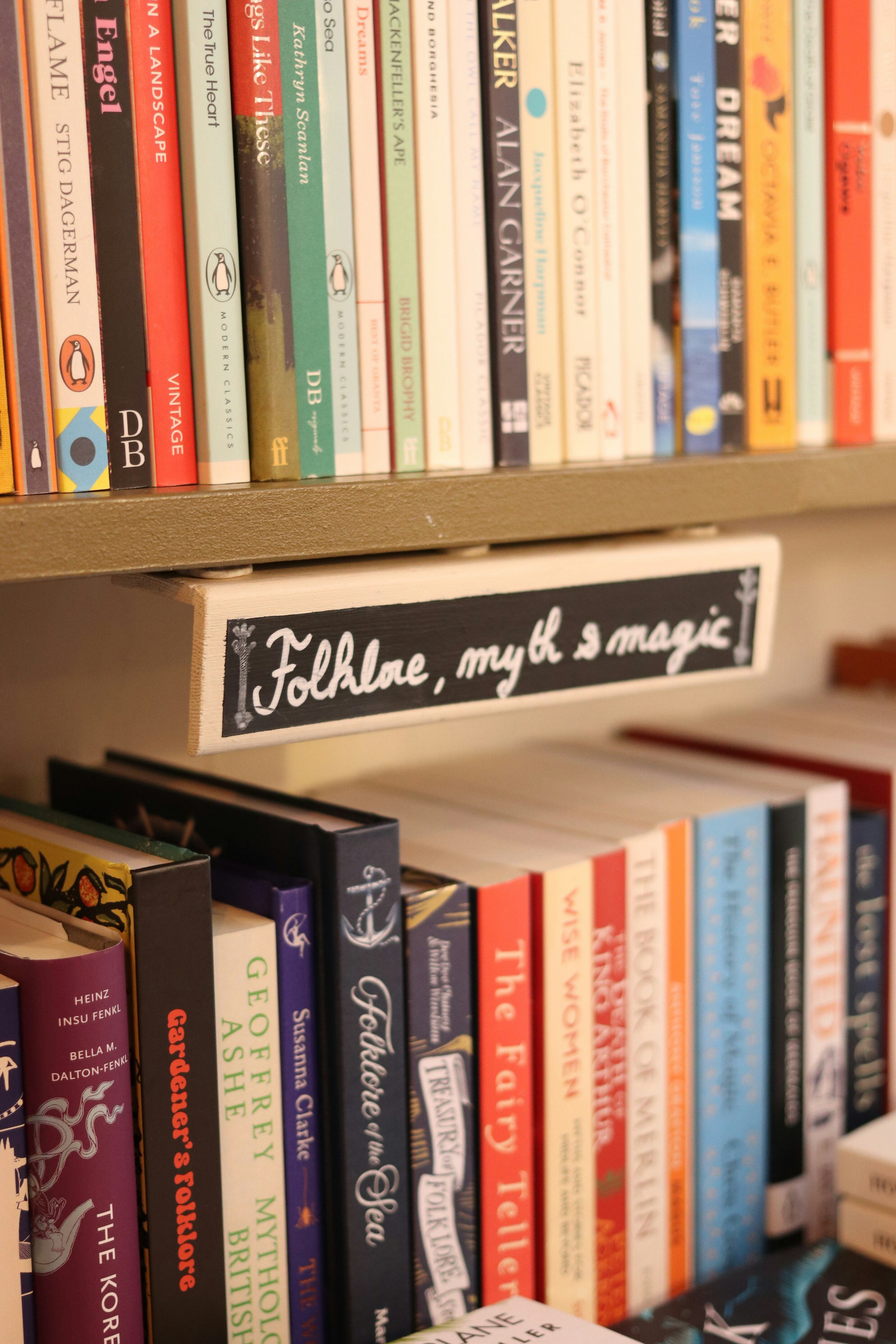
A bookshelf of books related to myth and magic Photo by Tanya Barrow on Unsplash
Changelog As this post is a living document, updates and details will be noted here.
Date
Information
5 June 2026
Initial post
9 June 2026
Added entries for Babylon 5, Battlestar Galactica, Borgen, Doctor Who, Arrival, District 9, The Neverending Story. Several comment additions. Images.
10 June 2026
Added Music section.
19 June 2026
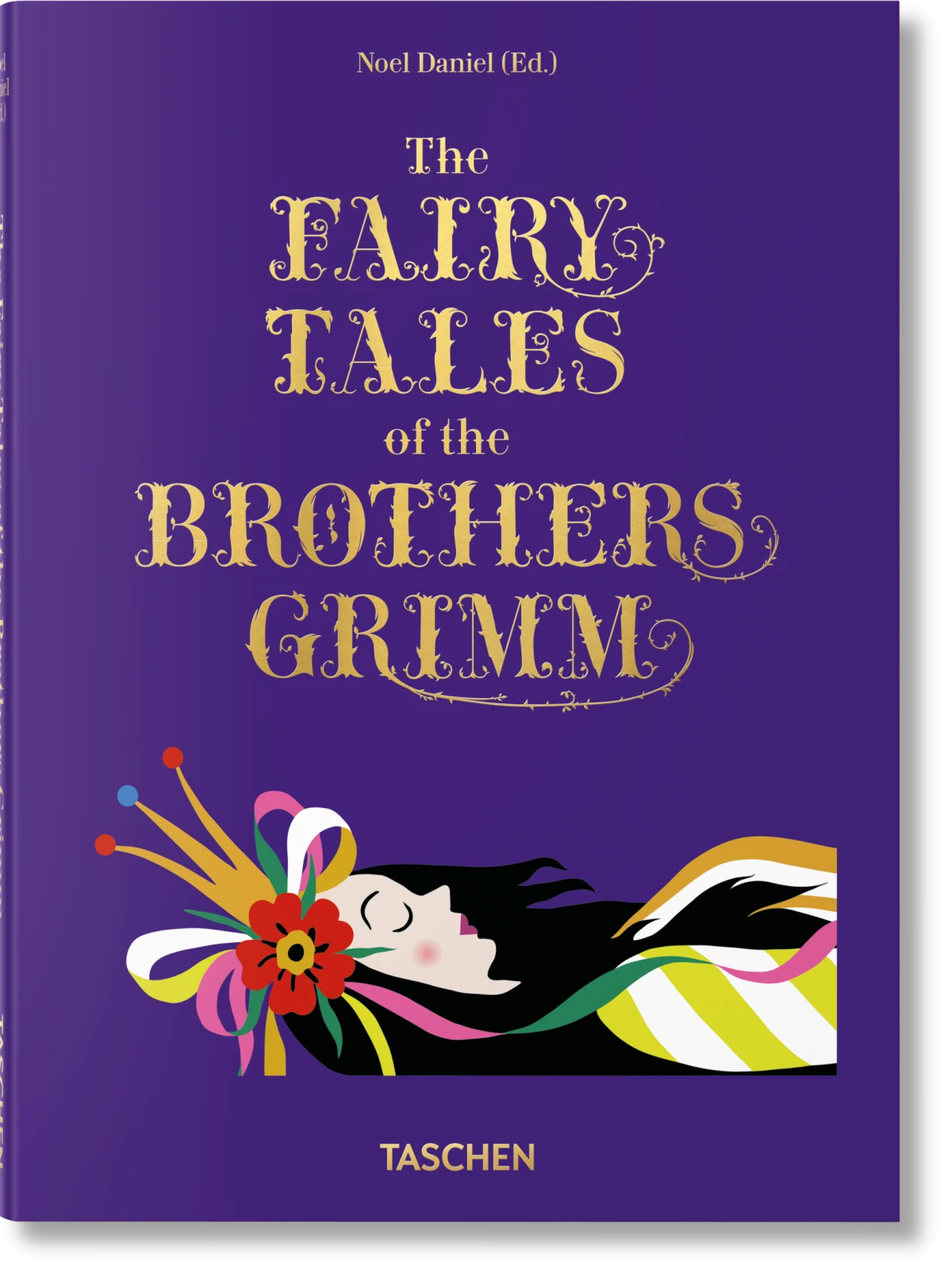
Added Stephen Fry's Greek mythology audiobooks, The Fairy Tales of the Brothers Grimm, The Silk Roads, Close Encounters of the Third Kind.
The original Dungeon Master's Guide included Gary Gygax's Appendix N: a list of books that aided and influenced the development of Dungeons and Dragons. To that end, here's Appendix N (Stephen's Version), with deepest apologies to Taylor for borrowing her naming style.
This list is by no means exhaustive, but it does include material across several forms including books, games, and visual media. Each section is in alpha order, either by author for books or title for other media. Occasionally, there's a short aside where a particular entry has something of note I want to point out.
I don't think any such list could ever be complete as you discover and take in new material all the time, e.g. at the time of writing in mid-2026, I've never read a book by Brandon Sanderson, one of the most influential fantasy writers of the early 21st Century. Material listed below is mostly linked to Wikipedia articles about those things, or where there is a better option, the latter. Where useful, I've also included a brief comment.
This list is a living document and will be updated from time to time. I'll note the latest updates at the top of the post. The absence of any particular work or creator isn't in any way a suggestion they aren't influential to me, and more likely an unintentional omission on my part. If I listed everything, I wouldn't have time for anything else...
Two notes of caution accompany this list:
Some of the material on this list is representative of its time, and includes attitudes, behaviour, or language that in the present day some may find distasteful or upsetting. Please, if you choose to explore some of the older material, do so with that context in mind and your own safety paramount. I have marked those materials, where I know this to be the case, with a skull emoji 💀.
The creators of some material have proved to be people who choose to bully, exploit, and manipulate others for their own personal gain or power and have caused their victims harm. I include these materials because they were influential to me at a time when those facts were not known. If you choose to explore those things, do so forearmed with an understanding of those people and their behaviour. I have marked where creators have proven problematic with a red flag emoji 🚩.
Books
These are all over the place in terms of when they were published and even by genre or subject matter. Some are quite recent, and others are antiques I inherited from my maternal grandparents.
Fiction
The Handmaid's Tale, Margaret Atwood, 1985 - powerful, feminist, anti-fascist. Read it. Watch the TV show, too.
The Testaments, Margaret Atwood, 2019 - the sequel to The Handmaid's Tale.
End of Days trilogy, John Birmingham, 2019-2021 - JB's books are great action spec fiction. Pick a series that interests you and dive in.
Ghost Species, James Bradley, 2020 - outstanding Australian climate fiction.
A rag, a Bone, and a Hank of Hair, Nicholas Fisk, 1980 - an odd YA SF novel that I read as a kid, and that has stuck with me for some reason. I've no idea where the copy I had has gone.
Mythos: A Retelling of the Myths of Ancient Greece, Heroes: Mortals and Monsters, Quests and Adventures, Troy: The Siege of Troy Retold and Odyssey: The Great Myth Retold, Michael Joseph, 2017-2024 - Stephen Fry's marvellous, horny (if you've never read Greek mythology before, their gods are all up in each others' business pretty much constantly), clever retelling of several myths that are fantastic in the audiobook form and almost as good in print.
Neuromancer, William Gibson, 1984 - arguably the novel that launched the cyberpunk genre. Gibson is worth every moment of your reading time. There's a huge selection to pick from in several series, some of which link to each other.
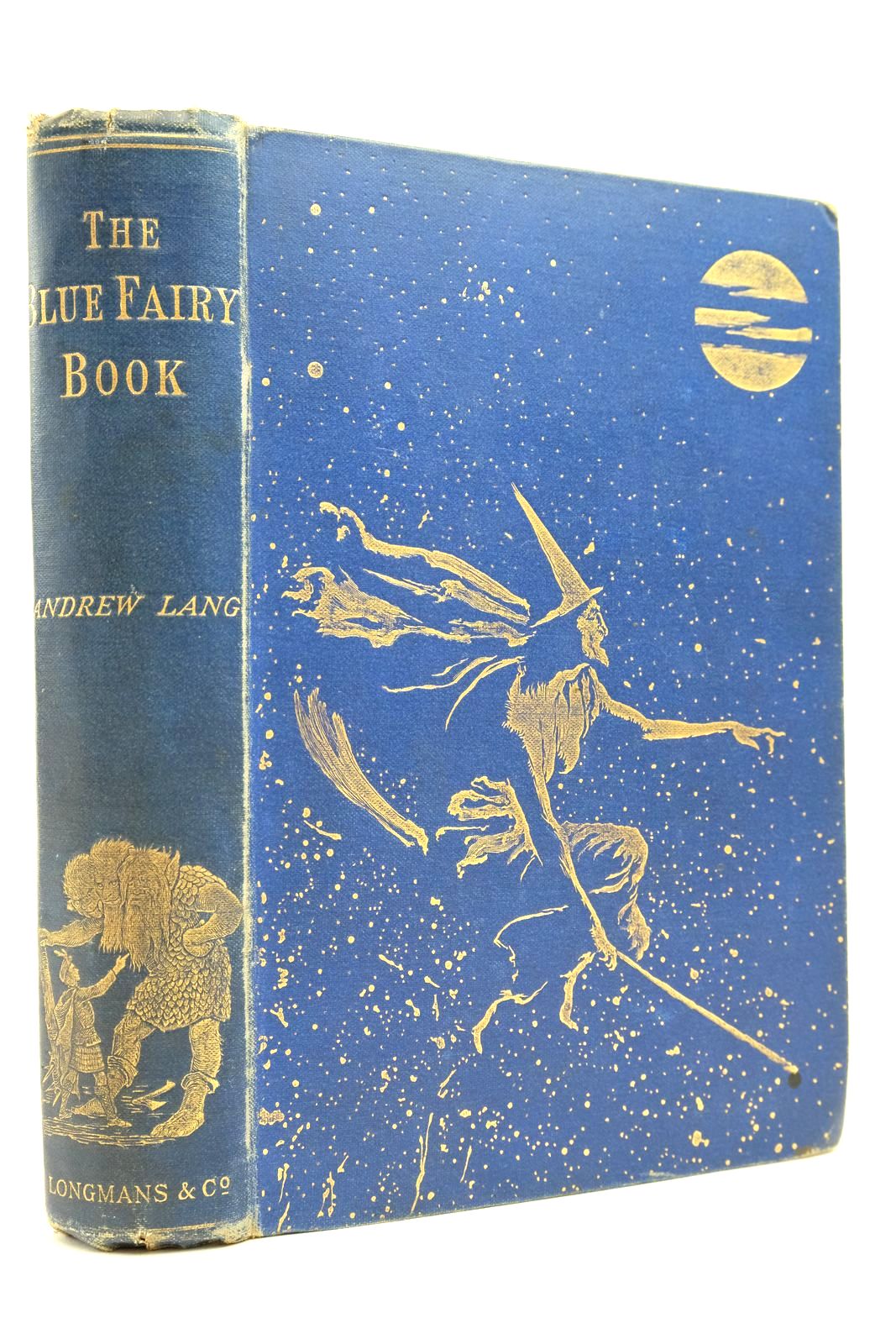
The Blue Fairy Book, Andrew Lang, 1889 - one of the great books of gathered fairy tales. No holds barred here - it's for children, and then again, clearly not. Blue Beard will mess you right up. My daughter now has my copy.
Perdido Street Station, China Miéville, 2000 - one of the scariest things I've ever read.Horror, fantasy, political Left commentary, a takedown of capitalism.
The City & the City, China Miéville, 2000 - fantastic weird fiction centred on a murder mystery and two cities (and societies) that share the same physical space but refuse to acknowledge the other.
Cloud Atlas, David Mitchell, 2004 - a beautiful, multi-generational tale of meta- and historical fiction.
The Discworld series, Terry Pratchett, 1983-2015 - honestly one of the great achievements in fantasy (and humour) fiction. Just read them. Pterry was one of the greats and a great human to boot.
Mars Trilogy, Kim Stanley Robinson, 1992-1996 - epic SF with a strong humanist and socialist bent.
The Years of Rice and Salt, Kim Stanley Robinson, 2002 - multi-generational alternate history of humanity after the Black Death where the Muslim and pan-Asian world is ascendant. There's reincarnation and characters in multiple points in time as well.
The Ministry for the Future, Kim Stanley Robinson, 2020 - what if humanity decided to stop destroying the climate? One of the great cli-fi novels. Honestly, pick anything by KSR and you won't be disappointed.
The Baroque Cycle, Neal Stephenson, 2003-2004 - these are a lot of work, given the size, but completely worth your time.
Alif the Unseen, G. Willow Wilson, 2012 - Middle Eastern cyberpunk with fantasy elements. If that doesn't entice you, nothing will.
Juice, Tim Winton, 2024 - excellent anti-corporate cli-fi from one of Australia's greatest authors. Set primarily in a future Western Australia after global heating has utterly changed the way humanity is forced to live.
A History of the World in 100 Objects, Neil MacGregor and the BBC, 2010 - this was published both as a radio series (and podcast) and accompanying book. Both are remarkable.
I was introduced to TTRPGs in Year 7, and started playing computer games and board games not long after. I'm the right age to have been there as some of these things emerged into being, and I consider them formative to my entire self and continue to enjoy them as I get older.
PC and console
The Assassin's Creed series, Ubisoft, 2007-present - in particular the reboot games starting with Assassin's Creed: Origins. Assassin's Creed: Mirage is perhaps my favourite in the series; it's tight, compact, shorter to play, and beautifully realises 9th Century Baghdad.
Baldur's Gate 3, Larian Studios, 2023 - D&D richly realised in a computer game. Just beautiful. Also incredibly complex and lets you do just about anything playing tabletop D&D does. I suspect nobody involved quite knew what a phenomenon it would be and how long its influence would continue to affect the community and those who worked on the game in almost every capacity.
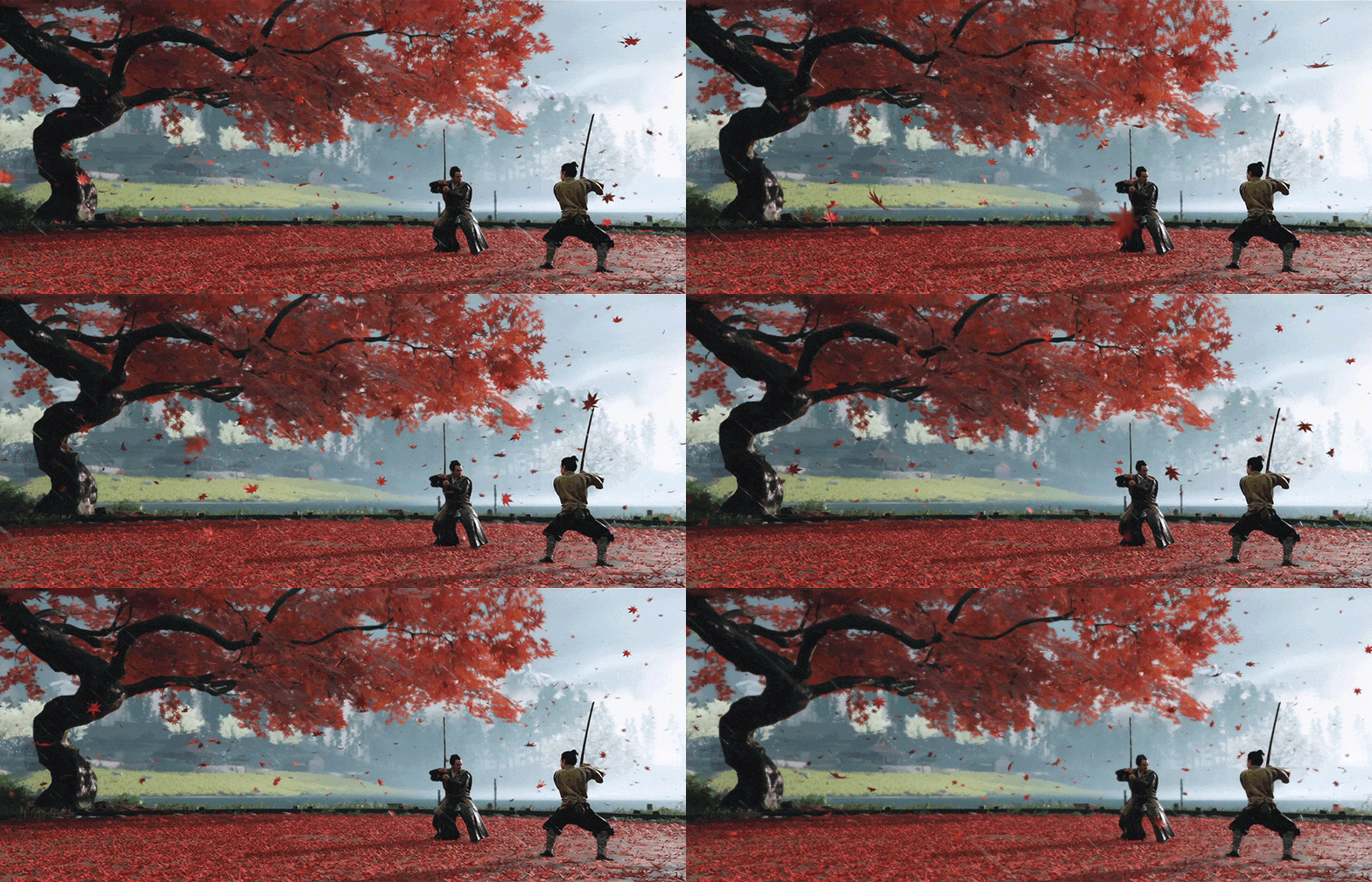
Ghost of Tsushima and Ghost of Yōtei, Sucker Punch Productions, 2020-2025 - damn, these games are beautiful! Great acting, compelling tales, stunning visuals, and music to stir the soul.
The Horizon series, Guerrilla Games, 2017-present - Aloy is a kick-arse heroine. That is all.
The Last of Us series, Naughty Dog, 2013-2024 - my favourite games ever. Ellie is messy, flawed, angry, and not for no reason. Gustavo Santaolalla's music sets the standard for every game that comes after.
Red Dead Redemption 2, Rockstar Games, 2018 - RDR2 remains a massive achievement and one of the most heartbreaking and enjoyable games ever put to pixel.
I grew up on reruns of movies and TV shows from the 1940s, 1950s, and 1960s, seeing all those fantastic adventure films on weekend afternoons and getting up early on a Saturday morning to see the cartoons and shows like Thunderbirds. F-A-B!
Drama
Andor, Disney+, 2022-2025 - some of the finest Star Wars storytelling, alongside the film it serves as the prequel for. Prescient in terms of telling the story of the growth af fascism in a fictional world at the same time as it happened in real life.
Babylon 5, PTEN, 1993-1997 - while freely admitting to never having seen the entire thing (much to my shame), J. Michael Straczynski's epic space opera is one of the greatest pieces of science fiction to ever screen on television.
Battlestar Galactica, Sci-Fi Channel, 2003-2009 - a vastly superior reimagining to the 1970's original, Ronald D. Moore's sprawling dark political-religious science fiction drama is deep, engaging, and at times odd as hell. So say we all.
Blake's 7, British Broadcasting Corporation, 1978-1981 - this was compulsory viewing in my house as a kid. Very much in the BBC's shaky set time, it was groundbreaking British SF television.
Borgen, DR Drama/SAM Productions, 2010-2013 and 2022, Scandinavian political drama as good as The West Wing, and arguably better.
Buffy the Vampire Slayer, Mutant Enemy Productions, 1997-2001 - the definitive Final Girl experience. Later revelations about the behaviour of Joss Whedon 🚩 should not dissuade you from watching.
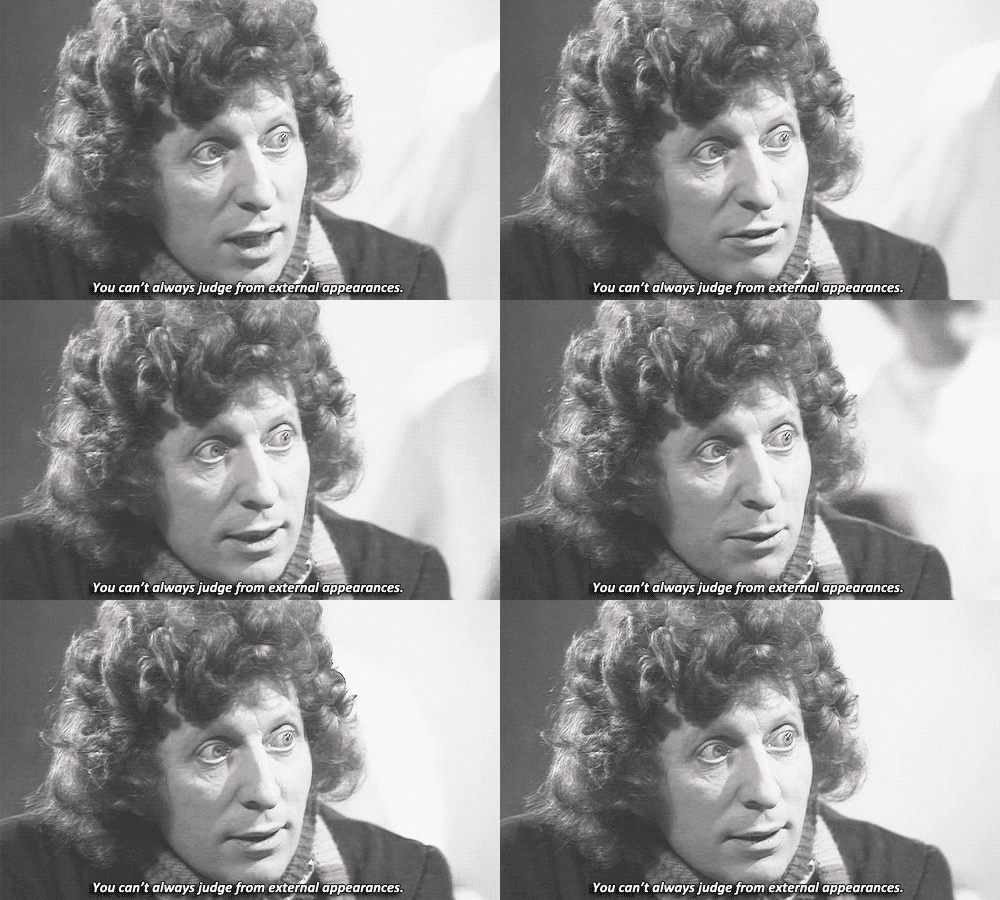
Doctor Who, British Broadcasting Corporation, 1963-present - for my generation, Doctor Who on a Saturday (maybe it was Sunday?) evening at 6:30 pm was an absolute necessity.
Firefly, Mutant Enemy Productions, 2002 - this marvellous space western introduced us to the crew of the Serenity. Those people remain geek culture favourites. Again, Joss Whedon's 🚩 involvement should not turn you away from this.
Game of Thrones, HBO, 2011-2019 - the television adaptation of George R.R. Martin's books was absolute water cooler, appointment TV, before the explosion of streaming services. Controversial inasmuch as it completed a story Martin himself may never put to page and for the rushed ending that many fans disliked. 💀 for violence, sexual violence, and frequent nudity.
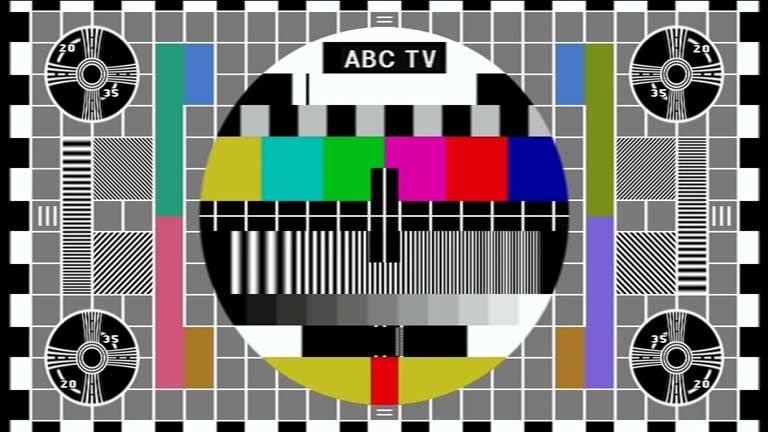
Land of the Giants, ABC (US), 1968-1970 - a staple of afternoon and Saturday morning rerun television. Very 1960s scifi.
The Last of Us, HBO, 2023-present - a very faithful adaptation of the console games with the quality to be expected from HBO.💀 for violence and zombie horror.
The Time Tunnel, 20th Century Fox Television, 1966-1967 - another Saturday morning rerun staple of 60s scifi.
The West Wing, NBC, 1999-2006 - Aaron Sorkin's "what if" of progressive US politics and widely considered one of the greatest television series of all time.
The X Files, Fox, 1993-2002 plus later additions - Chris Carter's weird SF magnum opus.
Factual and documentaries
The Repair Shop, British Broadcasting Corporation, 2017-present - a beautiful show where craftsmanship and the love of crafted things comes to the fore.
Stuff the British Stole, Australian Broadcasting Corporation, 2022-present - fantastic exposés on British colonialism and imperialism and the ransacking of lands they invaded presented by the estimable Marc Fennell, one of Australia's best documentarians. Now in its 3rd season. Also available as a podcast.
Films
As with television, I have watched perhaps thousands of films in my time. This list is just a handful of particularly memorable ones.
Drama
Arrival, Denis Villeneuve, Paramount Pictures, 2016 - one of the best depictions of first contact on film. Ted Chiang's Nebula Award-winning, strange and time-twisting Story of Your Life from which it is adapted should also be on your reading list.
The Beastmaster, Don Coscarelli, MGM, 1982 - one of the first of the big sword and sorcery movies of the 1980s. They hit at exactly the right time to appeal to me.
Blade Runner, Ridley Scott, Warner Bros., 1982 - the definitive dystopian dark future film. Heavily influenced the cyberpunk genre.
Bram Stoker's Dracula, Francis Ford Coppola, Columbia Pictures, 1992 - at the time, just the latest depiction of the eponymous vampire, albeit with a big-time director attached. But what a visual feast! And with two of the biggest young actors of the day attached in Keanu and Winona.
Brotherhood of the Wolf, Christophe Gans, Metropolitan FilmExport, 2001 - a too-little-known French action horror film with martial arts, a strange beast, and court and religious intrigue.
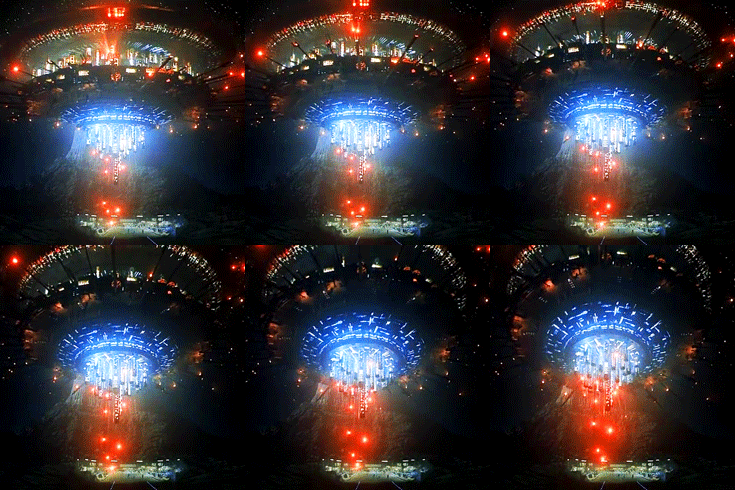
Close Encounters of the Third Kind, Steven Spielberg, Columbia Pictures, 1977 - what a year for SF 1977 was! Can you remember those five tones? The carving of Devil's Tower from mashed potato? One of the great first contact films.
Conan the Barbarian, John Milius, Universal Pictures and 20th Century Fox, 1982 - "What is best in life?" To see Arnold's muscles. To see him swing his sword. And to see James Earl Jones as Thulsa Doom.
Conan the Destroyer, Richard Fleischer, Universal Pictures, 1984 - Conan punches a camel. What more could you ask?
The Dark Crystal, Jim Henson, Universal Pictures, 1982 - proof that Muppets weren't just for educational TV, this is a masterpiece of storytelling and visuals.
District 9, Neill Blomkamp, Sony Pictures Releasing, 2009 - Blomkamp's political, first contact, body-horror masterpiece is incredible fodder for game designers who want to ick out their players.
Ferris Bueller's Day Off, John Hughes, Paramount Pictures, 1986 - look, it's FBDO, what more is there to say?
Hanna, Joe Wright, Focus Features, 2011 - one of the greatest spy films ever, and the introduction of Saorise Ronan to the world as an (near) adult actor.
Highlander, Russell Mulcahy, 20th Century Fox, 1986 - an Australian director coming off his debut of Razorback, plus immortals, swords, and that soundtrack by Queen.
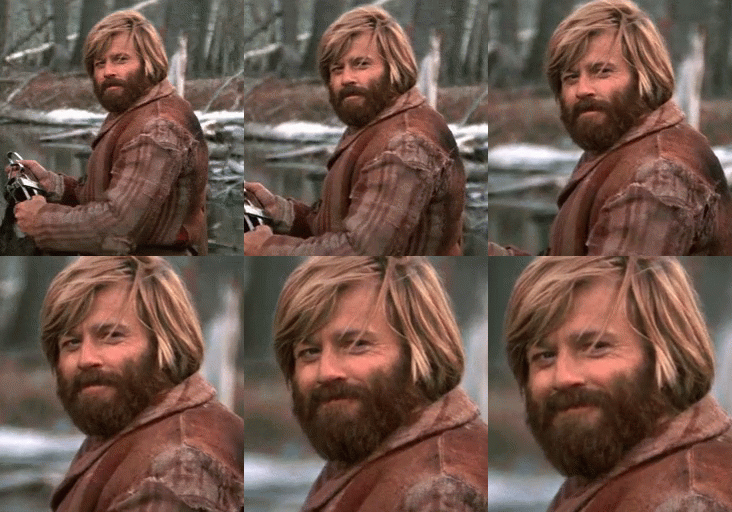
Jeremiah Johnson, Sydney Pollack, Warner Bros., 1972 - considered by many to be the greatest Western ever. A slow, contemplative film that feels unfinished when it ends.
Labyrinth, Jim Henson, Tri-Star Pictures, 1986 - just how incredible was it possible for Muppets to be? Plus a good story and David Bowie! If not for the success of The Dark Crystal, we might not have had this.
LadyHawke, Richard Donner, Warner Bros. and 20th Century Fox, 1985 - Matthew Broderick fresh off the success of WarGames but before Ferris Bueller's Day Off plus a very young Michelle Pfeiffer.
The Last Starfighter, Nick Castle, Universal Pictures, 1984 - computer game intrudes into real life, and one of the first films to use extensive CGI.
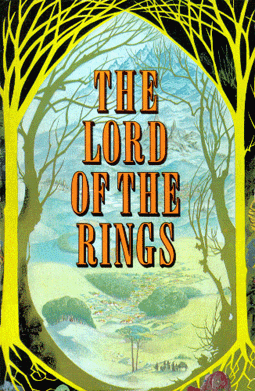
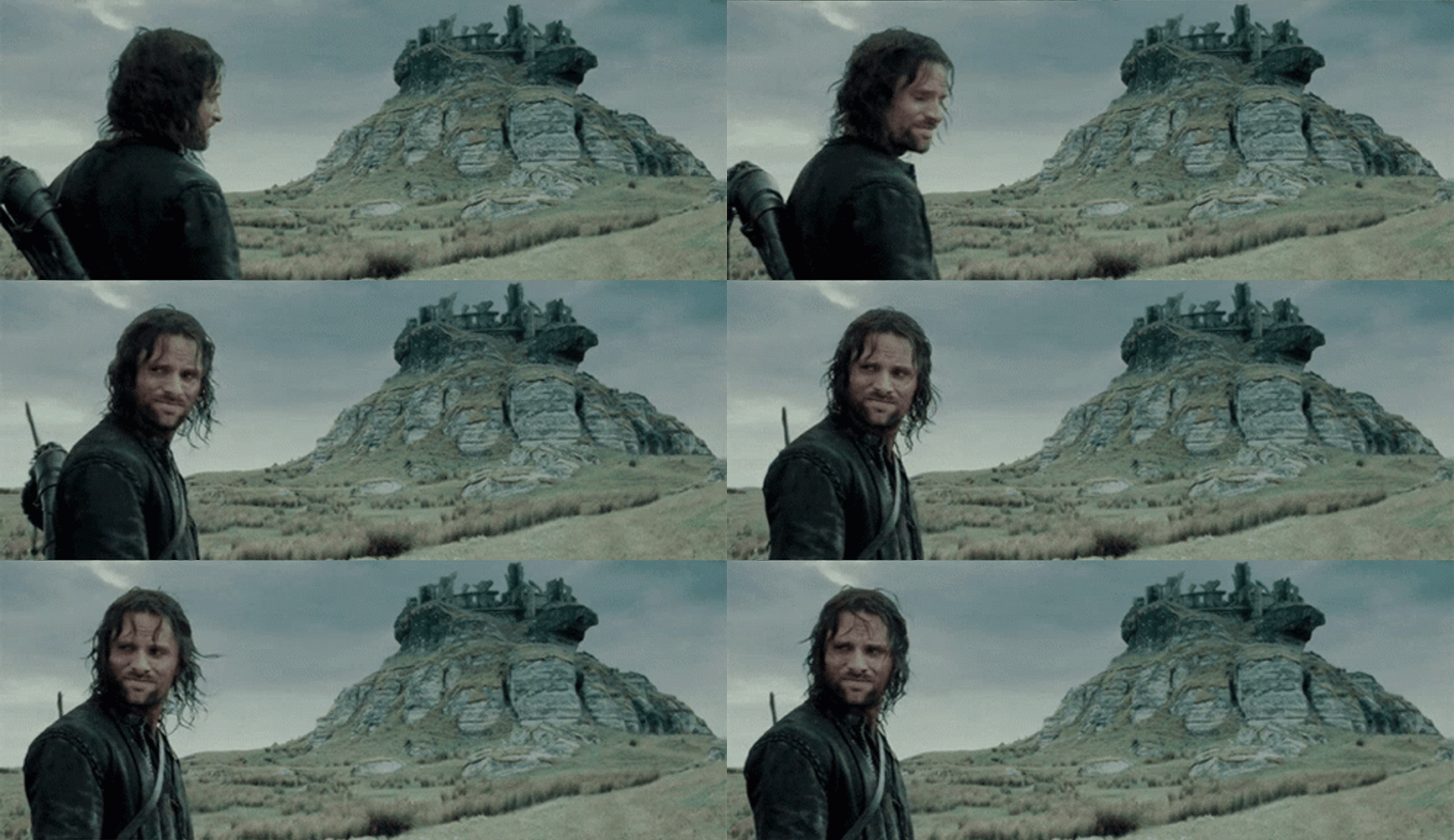
The Lord of the Rings films and The Hobbit films, Peter Jackson, New Line Cinema, 2001-2003 and 2012-2014 - the LotR films are a masterpiece top-to-bottom and should be watched by everyone with an interest in TTRPGs and fantasy literature. They're arguably among the most important films of any genre ever made. The Hobbit films are fun and worth your time, but more than a little overblown. Do yourself a favour and watch the extensive extras for both films available on DVD and digitally.
The Neverending Story, Wolfgang Petersen, Warner Bros.,1984 - fantastic realisation of a damaged, doomed, fantasy world with all the tropes. Worth your time.
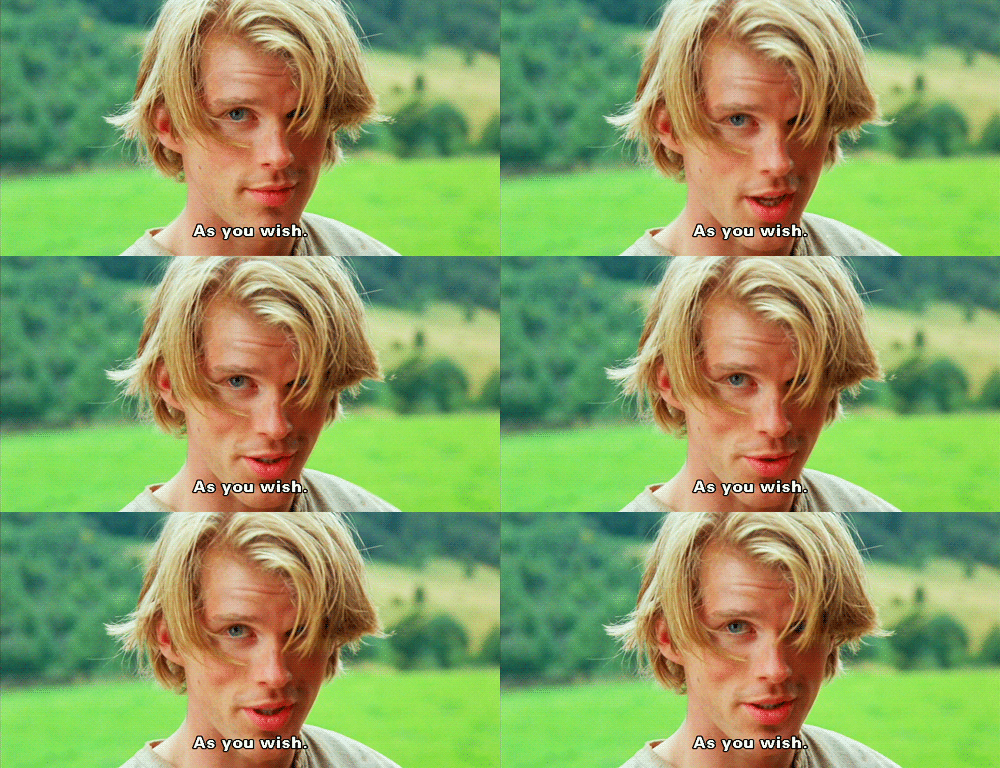
The Princess Bride, Rob Reiner, 20th Century Fox, 1987 - look, it's The Princess Bride. Just watch it. Then go read the book.
The Prince Who Was a Thief, Rudolph Maté, Universal Pictures, 1951 - Tony Curtis in his first starring role and Piper Laurie as his partner in a movie where they are supposed to be Arabs in Tangiers. Swashbuckling fun typical of the time despite its very white cast. It would be utterly impossible to make this film today. 💀 for terrible 1950s cultural stereotyping.
Red Sonja, Richard Fleischer, MGM/UA Entertainment Co., 1985 - finally, a female sword and sorcery protagonist! And Arnold playing not-Conan. The 2025 remake is not very good. 💀 for sexual assault.
Serenity, Joss Whedon 🚩, Universal Pictures, 2005 - in the absence of additional seasons, this is the best send-off the crew could have had.
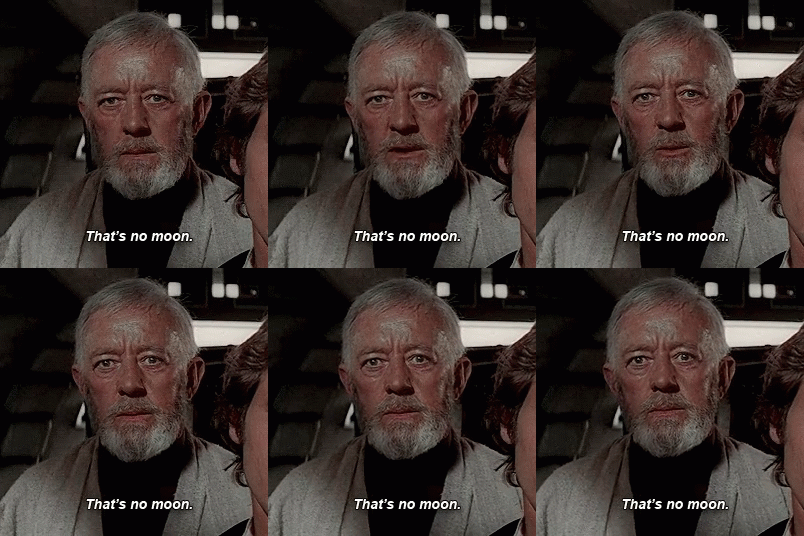
Star Wars Original Trilogy, George Lucas, Irvin Kershner, Richard Marquand, 20th Century Fox, 1977-1983 - it's Star Wars, what more do you say? The entire multiverse kicked off in 1977 is so culturally pervasive that few people don't understand the references. I'm old enough to have seen A New Hope in a cinema on first release. The later films are adequate, but not nearly as important culturally.
The Sword and the Sorceror, Albert Pyun, Group 1 International Distribution Organization Ltd., 1982 - not a very good film, but an absolute cult classic from the early 80's. And a sword with three spring-loaded blades!
WarGames, John Badham, MGM/UA Distribution Co. and United International Pictures, 1983 - "Do you want to play a game?"
Willow, Ron Howard, MGM/UA Distribution Co., 1988 - a fantastic fantasy adventure, and one of Ron Howard's earliest. George Lucas wrote the story.
Audio and podcasts
Music
I'm terrible at having music on while I work, as I can't focus. But I very much enjoy having music at the gaming table for effects and atmosphere. I also enjoy listening to soundtracks for games, movies, TV, and even the occasional stage musical. The entries below are a mix of music, composers, and performers I find interesting or stimulating.
In modern soundtrack composition, you don't get much more prolific than Bear McCreary or Ramin Djawadi. They are almost ubiquitous across film, television, and game soundtracks. There's reason for this: they are both prodigiously talented. Their work is so extensive it's deserving of an entire post of its own. Click one of the links and enjoy the dive down a deep rabbit hole.
Gustavo Santaolalla's spare, haunting, work for the two The Last of Us games as well as the TV series is iconic.
From an earlier generation, Howard Shore's work is truly inspiring. His soundtracks for all six of Peter Jackson's Hobbit/LotR films are immediately recognisable.
Also from that earlier generation, John Williams scored soundtracks for many people's entire movie-watching life. There is no question you have nascent earworms for many of Williams' works, whether that be his collaborations with George Lucas on the Star Wars films, or with Steven Spielberg on everything from Jaws to the upcoming Disclosure Day. Nearing 100 years of age, Williams has never really retired, but has more than earned it when he chooses to rest.
Two particular bands whose work I find interesting are Nightwish and The Warning. Hard-driving anthemic rock from one band that's been going for nearly 30 years and another who were discovered as children when they covered Metallica's Enter Sandman will get your creative juices flowing.
Factual
No One Saw It Coming, Australian Broadcasting Corporation, 2025-present - short episodes with documentarian Marc Fennell in conversation with experts on a vast range of invention, happenings, and people who somehow changed the world in unexpected ways.
Comments
Comments are disabled because you have not consented to their use. You can change your cookie preferences through our 'cookie banner'.
This website uses cookies
Select which cookies to opt-in to via the checkboxes below; our website uses cookies to examine site traffic and user activity while on our site, for marketing, and to provide social media functionality. Our privacy policy
Cookie settings
We use cookies to enhance your browsing experience, serve personalized ads or content, and analyze our traffic. By clicking "Accept All", you consent to our use of cookies. Our privacy policy
Required
These cookies help the site to perform basic functions such as understanding your (anonymised) page visits.
Analytics
Analytics cookies help us understand which pages visitors go to and how they interact with them. They are not necessary for you to use the site. Analytics are provided by Umami.
Comments
If you comment on this site you can choose to provide identifying information. You may comment anonymously and that's perfectly okay. Comments are managed by GraphComment.

Comments