
On cultural language and practices—some ideas for D&D 5.5e that might be useful
 Stephen Collins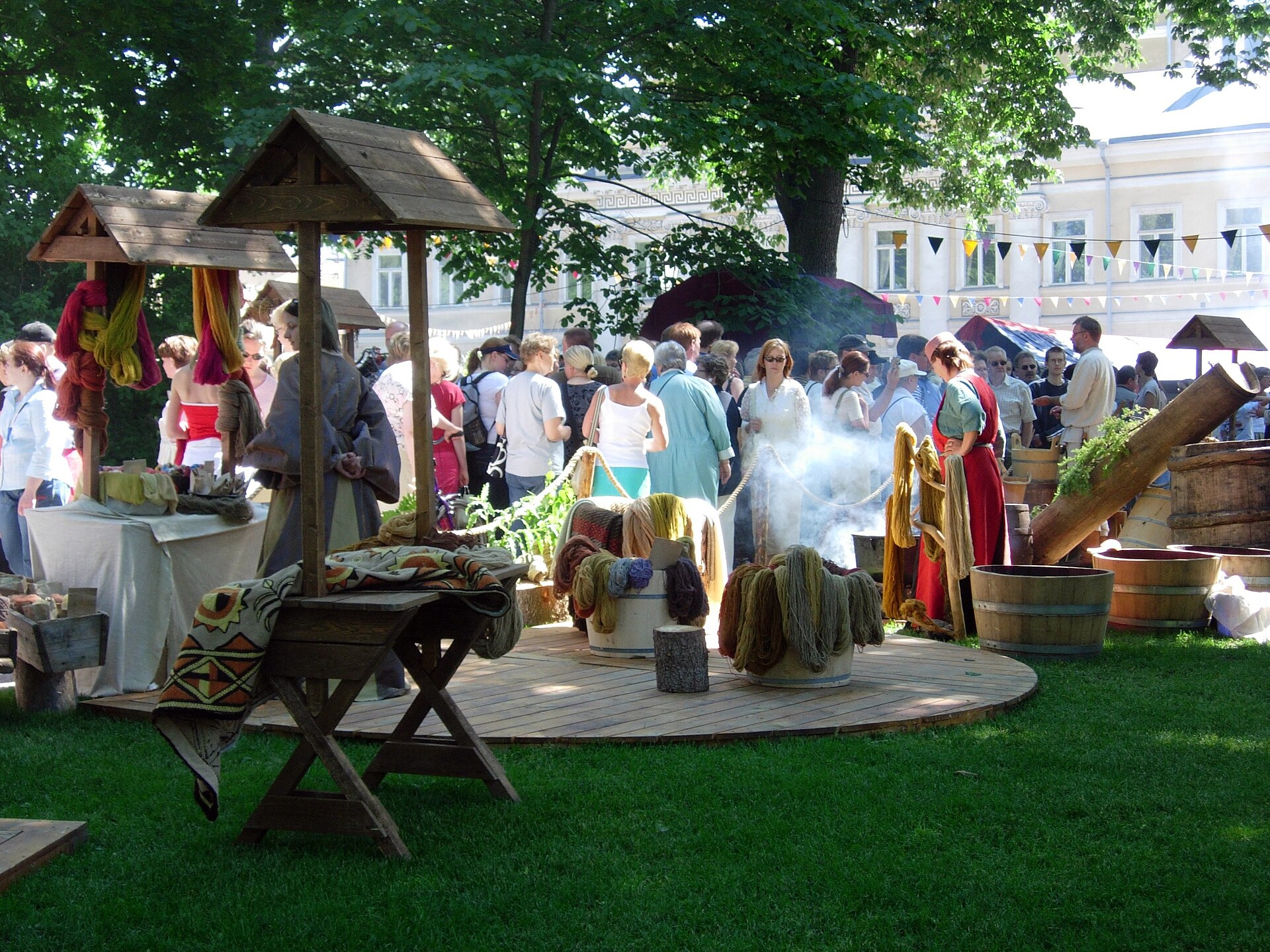
Out in the TTRPG blogosphere, Dave Clark (bedirthan) back in 2021 and Ian Brockbank (Melestrua) just this week, have been musing about language in D&D and how it's a pretty unwieldy club that gets deliberately ignored more often than not in the form of "Fred the Dwarf can understand Quentin the Elf because they speak both Dwarvish and Elvish and Common".
Dave and Ian have both taken a pass at some homebrew that introduces cultural knowledge as a replacement for languages.
It's an interesting idea, and it set me to thinking about the same problem. I figured I would take a pass at this quandary as well, so here's my thinking, expressed as a new general feat, with some context first. The context is founded in my long-ago studies in English Literature, and subsequent reading often about language formation, etymology, and dialect, and my career in design because I'm that kind of nerd.
On cultural language and practices
Despite seeing many examples of it in fantasy and science fiction, it would be foolish to assume that any large world speaks a universal commonly (wordplay intended) comprehensible tongue. Even if there is some form of shared language like the ubiquitous Common in Dungeons and Dragons, or Galactic Basic in the Star Wars universe, if you’re aiming for some semblance of verisimilitude then regional variation, accents, local names and usage, and the intrusion of foreign words unfamiliar elsewhere, ought to occur in a fictional world, just as they do here IRL.
Common is, but it also isn’t
In D&D, using Faerûn as our example, there are some important things to note about Common that are frequently hand-waved off.
First, Common is a trade language, as noted in the Forgotten Realms Campaign Setting for 3rd edition D&D and several other publications back as far as the original Forgotten Realms Campaign Set (the famed grey box), published in 1987.
As described in source materials, Common exists to facilitate simple communication, particularly transactions between local merchants, wherever they may be, and the caravans and the traders travelling to markets and caravanserai; that is, it was not useful for complicated topics. By implication, it would not have been spoken around the family table, or in temples, and certainly not at court.

Second, nearly everyone on Faerûn speaks Common as a second language, that is, they speak something else as their first language. That would be their cultural language. Cultural languages present a more complex challenge (see Player’s Handbook 2024, p.37 and Forgotten Realms: Heroes of Faerûn p.49) than comprehending Common as spoken by someone from a distant place.
The Forgotten Realms Wiki goes so far as to state that Common itself has regional dialects such that, for example, someone from Icewind Dale will have a challenging time (DC10 makes sense) understanding and speaking with someone from Calimport, or even Baldur's Gate.
Regional dialects of Common and cultural languages
Cultural languages would be spoken by PCs for their place of birth, everyone in native NPC populations in a region or nation, and by anyone meeting the Cultural Affinity feat requirements for Integration as described below. On page 49 of FRHoF, the Standard Languages of Faerûn table lists a wide range of possible cultural languages a PC or NPC might speak, based on their place of origin.
Cultural regions for Faerûn are shown in broad terms on the map on page 50 of FRHoF. More detailed language regions for Faerûn align to the various nations detailed in pages 49-92 of FRHoF and chapters 2 through 6 of Forgotten Realms: Adventures in Faerûn. The Forgotten Realms Wiki also has a Political Map of Faerun (correct for 1372 DR), shown below, that indicates the nations of western Faerûn.

Just as they do here IRL, cultural languages would merge and blend at the edges, such that permanent residents of a region within 10 miles of a national, regional, or city state border will be able to speak enough of a neighbouring place’s language and understand as much of the culture as necessary to get by in everyday society without committing grievous cultural faux pas, though they may be somewhat clumsy in their execution, e.g. Chessentan citizens resident near the borders of Chessenta and Unther would speak their own language natively, enough Untheric to be understood by nearby Unther residents, and the local Common dialect well enough to conduct trade at regional markets.
Cultural languages can be assumed as an additional language to any others taken by starting characters and as the default language for any NPC. Any player character or NPC can also be expected to speak the local dialect of Common well enough to conduct mundane life matters, particularly trade, with:
- any person within 20 miles of their birthplace if they grew to adulthood in that place, and;
- any person within 20 miles of their current place of residence if they have lived there at least 6 months/½ a year.
Comprehension of and conversation in cultural languages, on the other hand, take time and immersion to learn, and dedicated downtime effort needs to be undertaken by player characters in order to learn such things.
Cultural expectations and practices
The combination of what must be said, and particularly, how it should be said and the behaviours and rituals that accompany the conversation in a given situation represent the cultural expectations or cultural practices in a given place. For example, bartering with a merchant is expected in some places and offence will be caused if one does not participate in the expected back and forth, resulting in the purchase not being possible at that time. In other places, barter is considered offensive, and the price is the price. What goes in the markets of Neverwinter does not necessarily hold in the forges and smithies of Melvaunt, and may even cause terrible offence.
Regional cultural practice in matters such as festivals, courtship and marriage, dealing with the local watch, engaging with bureaucrats and nobles, and conducting trade with vendors, shopkeepers, market holders, or any other individual making or selling a product or service will differ from place to place. Do not go offering a herd of goats as bride price to the father of the young woman you are courting if she comes from a society where she is considered her own person at adulthood.
The Cultural Affinity feat, described below, offers a way to address these matters in D&D 5.5e that players and DMs may wish to include as homebrew for their campaigns.
Cultural Affinity
General Feat (Prerequisite: Level 4+, Intelligence and Wisdom 13+)
You gain the following benefits.
Cultural knowledge
You are familiar with and natively functional in the culture of a region:
- within a day’s ride/50 miles of your place of birth if you were resident there until adulthood (equivalent to 15 human years), and;
- in your current place of residence (nation or city state) out to 30 miles, if you have lived there more than 6 months/½ a year, and 50 miles if you have lived there at least 12 months/a full year.
You gain +2 on checks for History, Insight, and Religion in those places. You know and understand local customs and mores, ways of negotiation, festivals, and trade and market practices.
Integration
After spending more than 1 continuous month in a place, you are able to speak the local Common dialect proficiently enough to conduct normal conversation with native locals provided you use ½ a day of downtime each week in that month to spend time studying with a language teacher or in a place of gathering such as a tavern, town hall, or marketplace observing the flow of society.
You may optionally spend an additional ½ day each week during a continuous 3 month period in downtime studying with a teacher and observing society, which will allow you to develop proficiency in the local cultural language and understand the regional culture in depth. You get Advantage on any check involving Cultural knowledge (above).
Wayfinding
In populated places within your Cultural knowledge of village size or greater, you cannot become lost. You have a working sense of how such populated places operate and are planned and are always able to find the local market square, best (or least reputable) inn, watch house, temple to the main local deity, and town hall or administrative building.
Provided you have taken the time to learn the local Common dialect or cultural language, you are also able to find and converse with the appropriate person to glean a basic level of the information you need in those places, subject to a Persuasion (DC10) check.
I hope readers find my thinking and proposed solution useful. Please let me know in the comments whether you use this in your game, and any mechanical alterations you might make if my ideas seem off to you.

Comments